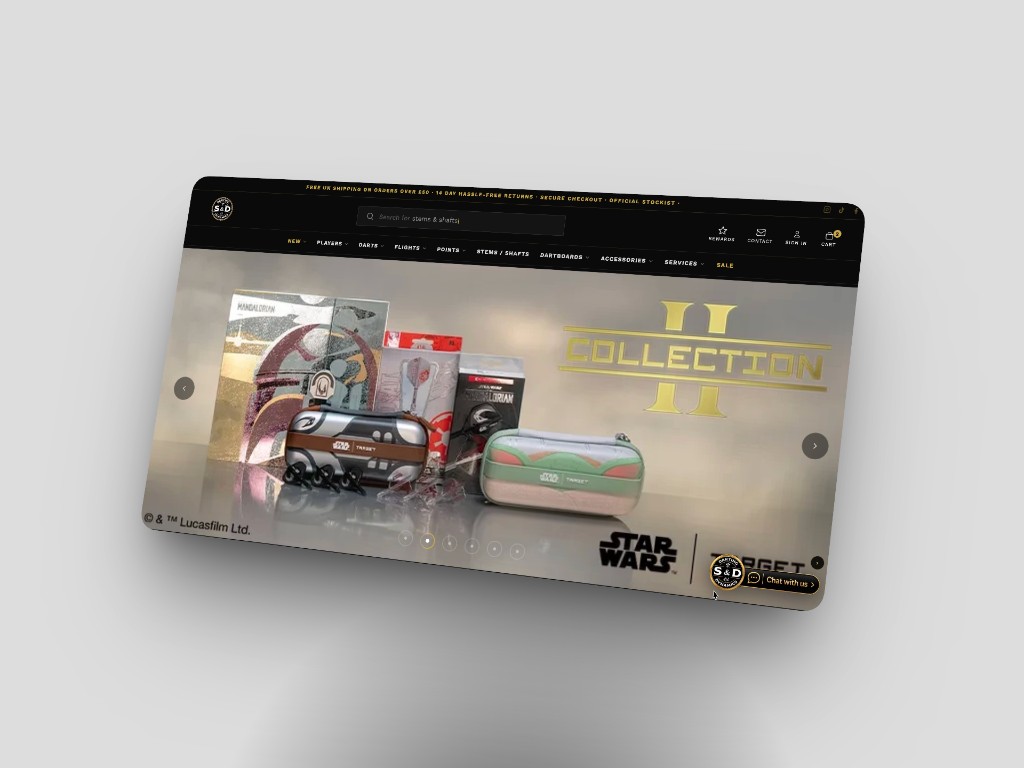
I have just built a custom Shopify store for S&D Darting Dynamics in Faversham: more than 750 products, organised properly, built to work on a phone. That is the online catalogue. It is not how most people find a darts shop when they are already in town.
They search “darts shop near me”. They search the town name plus darts. They open Maps. The result that wins that moment is Google Business Profile, not the homepage of a Shopify theme.
The website and the profile do different jobs
The website is for people who already want to browse: weights, brands, flights, boards, and a basket. Google Business Profile is for people who have not chosen a shop yet. Hours. Directions. Photos of the counter. Whether they can try a set of darts in store. A phone number they can tap.
If those two disagree, Google trusts neither of them fully. Same trading name, same address, same phone number, same website URL, on the profile and on the site. That is the whole of NAP consistency, and it is boring until it is wrong.
Going online does not replace the shop. For a specialist retailer, the shop is the proof. The profile should send people there. The website should make the range visible once they are interested.
Category is not a detail
Google ranks local results on relevance, distance and prominence. Category is how it decides relevance. A darts shop listed as a generic sports shop is competing against every retailer that sells a football. The primary category should be the closest match to what you actually are: a sporting goods store or hobby shop, with darts named in the description and the services list.
Fill the services. Darts. Dartboards. Flights. Stems. Points. Clothing if you sell it. Repointing or other counter services if you offer them. Empty services lists make the profile look unfinished, and unfinished profiles are easy to skip.
Photos that look like the shop, not a catalogue
Product shots belong on the website. The profile needs the room: the counter, the boards on the wall, the brands on the pegs, the parking if you have it, the street view so someone knows they have the right place on Salters Lane. Real photos, added over time, beat a dump of five images on the day you claimed the listing.
If customers can try before they buy, show that. A photo of someone at the counter with a set in hand does more for a first visit than another pack shot of Target darts.
Reviews that name the thing you sell
Review volume and recency both feed local ranking. The reviews that help a darts shop are specific: the brand they bought, that they could try a weight in store, that you had the flight they could not find online. “Great shop, highly recommend” is polite and almost useless.
Ask when the visit has gone well, not in a batch email six weeks later. Reply to every review. A reply that names the product or the advice you gave tells the next reader you are still paying attention.
Hours, posts, and the website link
Wrong hours lose more customers than a weak logo. Bank holidays, late nights, and days the shop is closed for a match or a stock take all belong on the profile before they belong on a handwritten sign on the door.
Use posts for the things the catalogue cannot shout from Maps: a Target Japan drop, a new board range, a clinic, a weekend opening. Link the profile to the live site, not a Facebook page, and make sure the site loads on a phone. Google will send the click. The site has to catch it.
Google publishes how local results work: relevance, distance and prominence. Prominence is reviews, links, and how complete and active the profile is. You cannot fake distance. You can work on the other two.
What this looks like for a Faversham darts shop
S&D Darting Dynamics has a real shop on Salters Lane and a Shopify store built around the range. The local job is to make those two read as one business: the profile for “darts Faversham” and “darts shop near me”, the website for the 750 plus products once someone is ready to look properly.
That is not a separate marketing hobby. It is the same project as the Shopify build, just on the side of Google that sits above the ordinary results.
If you run a specialist shop
- Claim and complete the profile before you spend more on ads. Category, services, hours, photos, website.
- Match the name, address and phone to the website exactly.
- Ask for reviews that mention the product or the visit, and keep them coming.
- Use the profile to sell the shop and the website to sell the range. Do not make one do the other’s job.
I wrote more on why local businesses disappear from Google in Why your local business is invisible on Google. The Shopify side of this one is in the S&D Darting Dynamics case study.